Description
1.1 General information
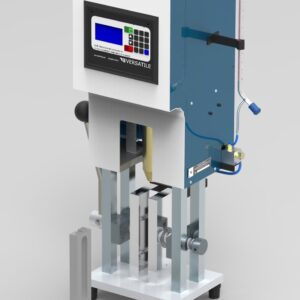
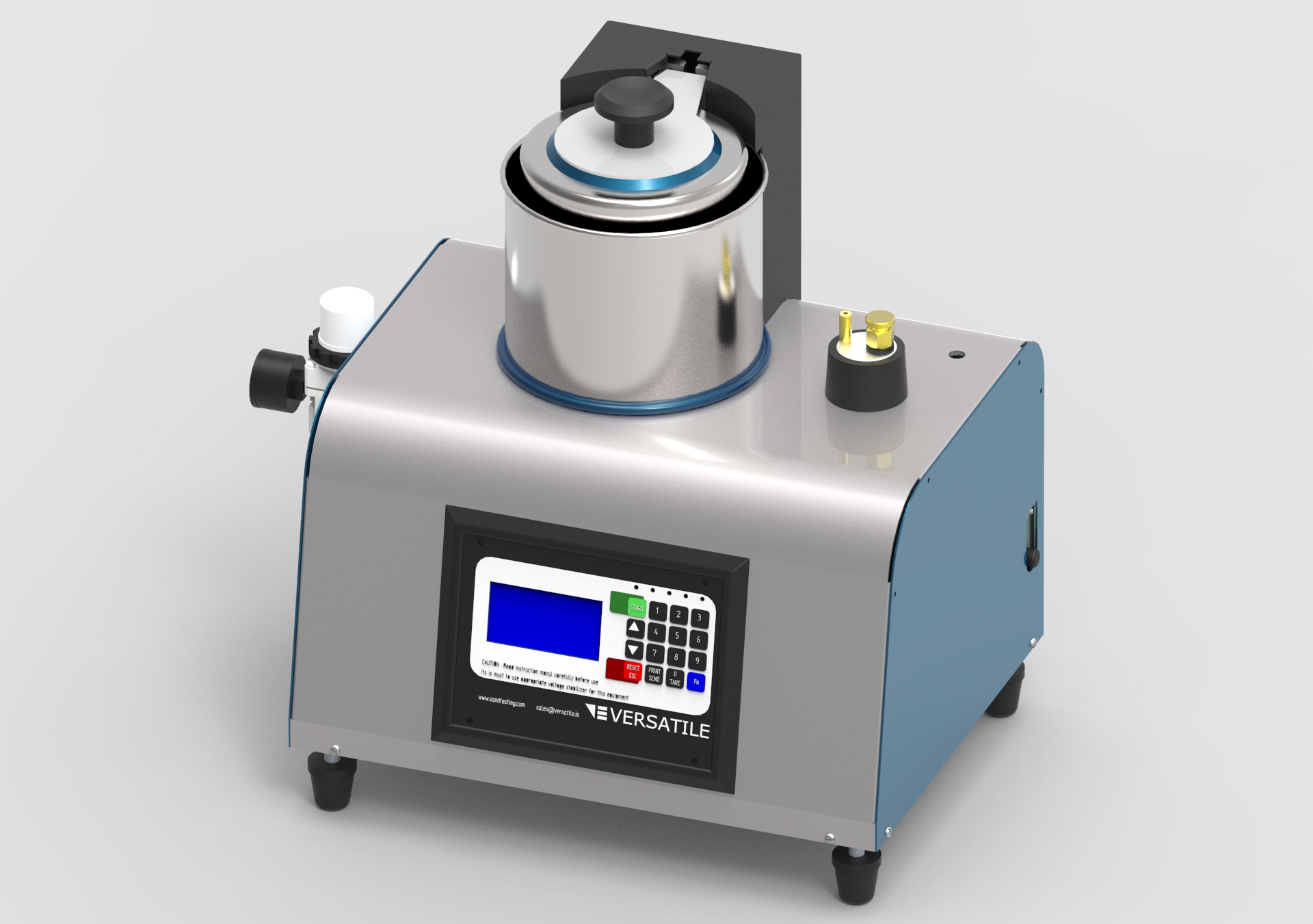
This is a precision equipment to measure Permeability of Foundry Sands. By default it can measure absolute permeability of an AFS (Dia. 2”X2”) or Metric (Dia. 50mmX50mm) Specimen.
With Help of attachment it can also measure
- Relative Permeability of Moulds (Refer 4.2.1)
- Absolute Permeability of Cores (Refer 4.2.2)
- Absolute Permeability of Un-bonded sand (Refer 4.2.3).
1.2 General Usage
Specimen held in a Tube or accessory is placed on the measuring Rubber Boss. On press of start button, within few seconds the equipment shows Permeability reading.
1.3 Product Data
|
Product Name: |
Digital Permeability Meter |
|
Product Code: |
VPD1 |
|
Order Reference Code: |
V0000107 |
|
Electrical Supply Required: |
230v 50Hz A.C. (Default) 110v 60 Hz A.C (Optional) Single Phase, Stabilized with Over/ Under Voltage cut-off. |
|
Electrical Plug: |
M type : 15 Amp Plug |
|
Typical Maximum Current: |
2.2 A at 230V |
|
Compressed air Supply: |
Required 2 Kg/cm2 Dry Compressed Air to make the operations fully automatic. Optional if Air Drum can be lifted by Operator. |
|
Communication: |
|
|
Dimensions: |
500 X 320 X 460 mm (WXBXH) |
|
Packing Dimensions: |
600 mmx 450mm x 625 mm (WXBXH) Typical |
|
Net Weight: |
Approximately 25 kg |
|
Gross Weight: |
Approximately 30 kg |
|
Colour: |
Factory Default |
|
Measuring Range: |
0-100 mmWC and Related readings AFS Permeability measurement chart digitally displayed. |
|
Traceable to: |
Manufacturers Standards |
|
Least Count: |
1 mmWC |
|
Specimen Requirements: |
Compression type specimen |
|
Operating Temperature: |
0-50 degrees Celsius |
|
Testing Standards: |
BIS: Standard AFS: Optional |
|
Calibration Frequency: |
22500 nos. of Testing Cycles or Once in Year |
2.1 Scope of supply
- Digital Permeability Meter.
- Large Orifice.
- Syphon Pump.
- Calibration certificate.
- Instruction manual.
3.1 Recommended pre-requisite equipment
Sand Splitter : To get representative sample
Specimen preparation equipment to make a standard AFS or Metric Compression specimen.
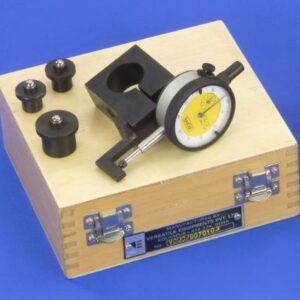
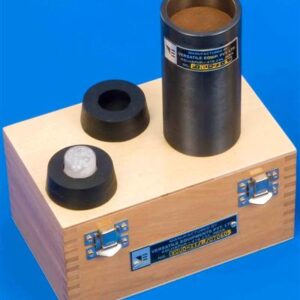
4.1 Recommended Calibration kits
There are four types of calibration kits to choose from:
VKPA: With Std. Specimen type for Small Orifice
VKPB: With Std. Specimen type for Large Orifice
VKPC: With Rubber Boss type for Small Orifice
VKPD: With Rubber Boss type for Large Orifice
4.2 Recommended attachments
- VPR: Mould Perm Tester
- VD: Core Permeability Tube
- VBP: Base Permeability Tube
- Small Orifice
4.3 Alternative equipment
- Permeability Meter VP (For Educational Purposes)
- Electropermeability Meter VEP
- VCAT Multi Tester
- Digital Permeability Meter VPD
- Digital Permeability Meter VPD II
5.1 Consumables
- Demineralized Water
- Rubber Boss Assembly (Part # V4500259)
More about permeability
The Unseen Pillar of Casting: A Deep Dive into Sand Permeability
Permeability. This is the measure of a sand mold’s ability to allow gases to pass through it. It is a fundamental requirement for producing sound, defect-free castings. A mold that cannot effectively vent the massive volume of gases generated during pouring is a recipe for disaster, leading to defects that can render a casting useless.
The Theory and Importance of Permeability Testing
At its core, permeability is a measure of how easily a fluid—in this case, gas—can flow through a porous medium like compacted sand. The scientific principle governing this is Darcy’s Law, which establishes a relationship between the flow rate, the properties of the fluid, the pressure gradient, and the permeability of the medium.
In a foundry setting, the standard method for quantifying this property is the American Foundry Society (AFS) Permeability Test. This test involves taking a standard cylindrical specimen of prepared sand (2 inches in diameter and 2 inches high), ramming it with a standard force, and then measuring the time it takes for a specific volume of air (2000 cc) to pass through it under a constant pressure. The result is expressed as a Permeability Number. A higher number signifies a more permeable sand, meaning gases can escape more easily.
The importance of this test cannot be overstated. When molten metal enters the mold cavity, it rapidly heats the sand and any moisture or organic binders present. This process generates a significant volume of gases, including steam, hydrogen, carbon monoxide, and carbon dioxide. This gas volume can be many times greater than the volume of the mold itself. If these gases cannot escape through the sand pores quickly and efficiently, they will become trapped, building up pressure within the mold. This pressure can resist the inflow of metal, leading to incomplete castings, or it can force its way into the solidifying metal, creating a variety of gas-related defects.
Therefore, permeability is a critical balancing act:
- Too Low Permeability: Traps gases, causing defects like blowholes and pinholes.
- Too High Permeability: Can lead to a poor surface finish on the casting and may cause defects like metal penetration, where the molten metal seeps into the large pores between sand grains.
Factors Influencing Sand Permeability
Permeability is not a fixed property but is influenced by several interconnected factors related to the sand and the molding process. Understanding these factors is key to controlling the final outcome.
- Grain Size and Shape: This is the most significant factor. Coarser, more uniform sand grains create larger voids between them, resulting in higher permeability. Finer sands pack more densely, leading to smaller voids and lower permeability. Similarly, rounded grains will have larger pore spaces than angular grains, which can interlock more tightly.
- Grain Distribution: A sand with a wide distribution of grain sizes will have lower permeability. The smaller grains will fill the voids between the larger grains, reducing the overall porosity. Foundries often aim for a sand with three to four sieve distributions to create a balance between strength and permeability.
- Binder Content and Type: The type and amount of binder (such as clay or chemical resins) directly impact permeability. An excess of binder can fill the voids between sand grains, drastically reducing permeability.
- Moisture Content: In green sand systems, water content is critical. A small amount of water is necessary to activate the clay binder, but excessive moisture generates more steam during pouring and can also reduce permeability by filling pore spaces.
- Ramming Density: The more a sand is compacted or rammed, the smaller the voids between the grains become, and the lower the permeability. The ramming energy must be carefully controlled to achieve the desired mold hardness and permeability.
Permeability of Different Sand Types:
- Silica Sand: The most common foundry sand. Its permeability can be easily controlled by managing grain size and distribution.
- Zircon Sand: Being finer and having a different grain shape, zircon sand typically has lower permeability than silica sand but offers higher refractoriness and a better surface finish.
- Chromite Sand: Similar to zircon, chromite is used for its high thermal conductivity and chill effect. Its angular grain shape can lead to lower permeability if not managed properly.
Permeability as a Diagnostic Tool for Casting Defects
An out-of-spec permeability reading is a major clue when diagnosing casting defects. By analyzing the permeability number in conjunction with the type of defect observed, foundry engineers can pinpoint the root cause.
- Blowholes and Gas Porosity: These are cavities within the casting caused by trapped gas. They are the classic symptom of low permeability. If the sand is too fine, has too much binder or moisture, or is over-rammed, gases cannot escape, and they form bubbles in the metal.
- Metal Penetration: This occurs when molten metal seeps into the sand mold, resulting in a rough, sandy surface on the casting. This is often a sign of excessively high permeability, where the pores between sand grains are too large for the surface tension of the metal to bridge.
- Scabs, Cuts, and Washes: These defects, where a portion of the mold surface breaks away and is embedded in the casting, can be indirectly related to permeability. Low permeability can cause high gas pressure at the mold-metal interface, which can lift or erode the sand surface.
- Incomplete Fill (Misrun): If the back-pressure from trapped gases due to low permeability is high enough, it can prematurely halt the flow of molten metal, preventing it from completely filling the mold cavity.
The Modern Approach: Online Testing and Automation
Traditionally, sand testing has been a manual, batch-based process performed in a laboratory. While essential, this method has a time lag; by the time a problem is detected, a significant amount of defective sand may have already been used, resulting in scrap castings.
The modern trend is a move towards online and automated sand testing. Advanced systems are now available that can be integrated directly into the sand preparation and molding line. These systems automatically sample the sand at critical points (e.g., after the muller or before the molding machine) and provide near-instantaneous readings for key properties, including permeability, compactability, and moisture.
…and more
The importance of this evolution is immense:
- Real-Time Control: The control system can use the live data to make immediate, automatic adjustments to the sand mix, such as altering water or binder additions.
- Process Stability: Automation minimizes the human element and ensures that sand properties are maintained within a very tight control window, batch after batch.
- Defect Prevention: By catching deviations as they happen, these systems prevent the production of defective molds, significantly reducing scrap rates.
- Data-Driven Improvement: The continuous collection of data allows for sophisticated analysis, helping foundries to understand the complex interactions between sand variables and casting outcomes, paving the way for further process optimization (Industry 4.0).
The Right Ways to Control Permeability
Effective control over permeability is a daily discipline in the foundry. It requires a systematic approach encompassing materials, processes, and testing.
Sand Selection and Management: Start with a base sand that has the appropriate grain fineness number (GFN) and distribution for the type of castings being produced. Regularly perform sieve analysis to monitor for changes in grain distribution due to degradation or contamination.
Binder and Additive Control: Precisely control the addition of clay, resins, and other additives. Use tests like the Methylene Blue clay test to determine the amount of active clay in the system. Avoid excessive additions that can clog pore spaces.
Moisture Management: This is especially critical for green sand. Use compactability testing as the primary method to control water additions at the muller. This ensures consistent “temper” and helps stabilize permeability.
Compaction Control: Standardize and control the ramming or squeezing energy applied during molding. This ensures consistent mold density and, therefore, consistent permeability.
Mulling Efficiency: Ensure the muller is operating correctly. Proper mulling evenly coats sand grains with binder without excessively breaking down the grains, which would generate more fines and reduce permeability.